How to prepare your home for an interior paint job
A small amount of homeowner prep before the crew arrives shortens the job, protects the things you care about, and makes for a much better finished result.
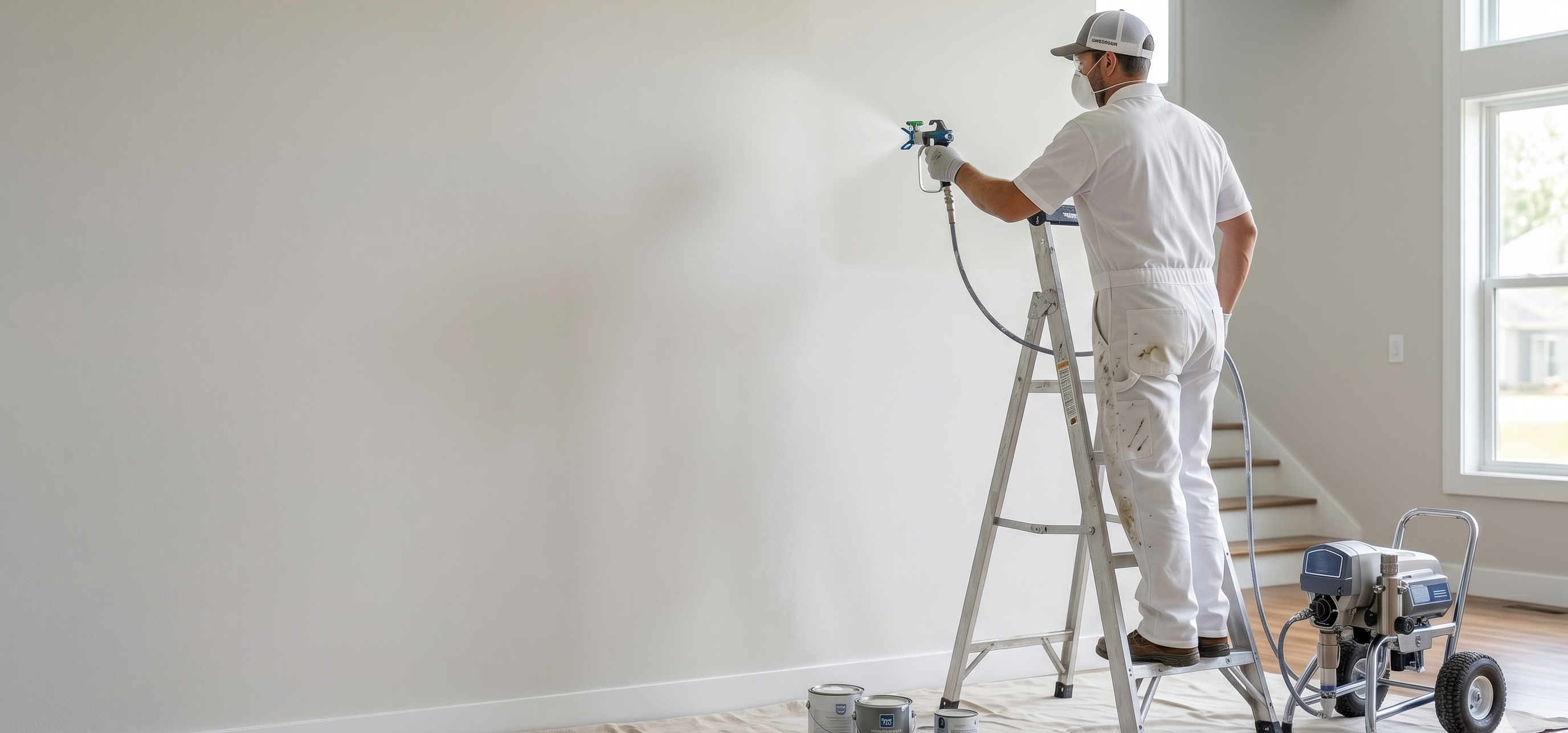
The biggest variable in how an interior paint job goes — beyond the crew’s skill — is how much groundwork the homeowner does before day one. We don’t expect anyone to prep like a paint crew. But the projects that come out best almost always start with a homeowner who walked through the house the weekend before with this list.
It takes a couple of hours. The crew lead will thank you, the job will move faster, and your stuff is less likely to end up with a fleck of Repose Gray on it.
Two weeks out: decisions, not actions
Most of the avoidable problems on an interior paint job come from decisions that get made under time pressure on day two. Get them off the table in advance.
Pick your colors
Not “I’m thinking grayish.” Samples on the wall. Samples viewed at three times of day — morning, midday, evening — in the actual room. If you’re going to look at a color for the next eight years, spend two weeks looking at it on the wall first.
The crew can run for an extra sample mid-job, but every “let me change it” costs a half day and money.
Pick your sheens
For most homes:
- Ceilings — flat
- Living areas and bedrooms — eggshell or matte
- Bathrooms, kitchens, mudrooms — satin or pearl
- Trim, doors, cabinets — semi-gloss or satin enamel
If you don’t volunteer a preference, your crew will go with this kind of default. Worth confirming up front rather than discovering you wanted matte where you got eggshell.
Decide what’s in scope
Walk the rooms with a flashlight. Make a list of:
- Any holes, cracks, water stains, or wallpaper issues that need attention
- Trim and doors you do or don’t want repainted
- Closets you do or don’t want included
- Ceilings you do or don’t want included
Quotes are built off this list. If you change scope on day three, you’re changing price.
One week out: clear the runway
A week before the start date, walk the work zone once with the eye of “if something fragile is here, it’s at risk.”
Take down and store:
- Wall art, mirrors, photographs
- Curtains, drapes, and rods
- Floating shelves
- Anything magnetic on the fridge if the kitchen is in scope
- Removable rugs (the crew will roll them but storage is on you)
Empty:
- Closets being painted
- Bookshelves attached to walls being painted
- Cabinet contents if cabinets are in scope
- Mantles, side tables, dressers near the work zone
Move out of the rooms:
- Children’s toys
- Houseplants (paint dust and houseplants do not mix)
- Electronics you don’t want unplugged and wrapped by someone else
- Anything irreplaceable
The crew will move and cover what’s left. We don’t expect a room emptied to the studs. We do appreciate the bottle of bourbon on the top shelf going somewhere we won’t be tempted to dust around.
Two days out: the small stuff
Two days before start, the kind of details that only matter once they matter:
- Confirm the start time and the access plan (key, lockbox, garage code) with the crew lead
- Set aside one room you can live out of for a few days if it’s a multi-room job
- Make a quick note of anything weird about the house — switches that are wired backward, doors that don’t latch, the squeaky floorboard that everyone steps around
- Identify a hose bib and a sink the crew can use for cleanup
- Park one car out of the driveway
- Make sure HVAC filters are fresh and registers can be covered
If anyone in the household has scent sensitivity, asthma, or chemical allergies, raise it on this call. Modern paints are gentler than the lead-and-oil era but they still off-gas. We can plan around it — different products, ventilation strategy, day-of timing.
The morning of: where you actually help
You don’t need to be home when the crew arrives. If you are:
- Walk the rooms with the crew lead once. Five minutes. Confirm scope.
- Show them the access plan: where they can park, which door to use, which bathroom is theirs for the day.
- Hand off any decisions still pending.
- Get out of their way for the rest of the day.
A walk-through avoids the most common day-one mistake: a misunderstanding about what’s painted versus left alone. We have, more than once, finished a beautiful coat on a wall the homeowner intended to keep wallpapered. A 5-minute walk-through prevents this.
During the job: a few small habits
For multi-day jobs, the homeowner habits that help:
- Don’t touch walls for 24 hours after the last coat in a room. Acrylic feels dry but isn’t cured. Even a brush of a sleeve can leave a mark for weeks.
- Don’t move furniture back yourself. The crew will reposition heavy pieces; let them. Slid-back furniture across a 12-hour-old finish picks up paint on legs.
- Open one window per painted room overnight, just a crack. It speeds cure and clears any residual odor.
- Keep pets and small children clear of the work zone during work hours. Dust from sanding is the bigger concern than the paint itself.
- Flag concerns the same day, not at the end. A run, a holiday, a mismatched touch-up — let the crew lead know in the moment. Easy to fix on day three. Harder on day seven.
After the job: what to look for
Walk every painted room with the crew lead before they pack out. Bring a flashlight; hold it low and across the wall, parallel to the surface. That’s how you find:
- Brush marks where there should be a roller texture
- Roller stipple that’s heavier than the surrounding wall
- Holidays (thin spots where the previous color shows through)
- Tape lines that need a touch
- Drips at the bottom of doors and casings
It’s normal for a few items to show up on the punch list. A good crew expects them and addresses them on the spot. A great crew has already found them and fixed them before you walk through.
Two things not to do
A short list of “helpful” prep that actually creates problems:
- Don’t pre-patch holes with toothpaste, drywall mud, or putty unless you’ve patched drywall before. Wrong product, wrong technique, wrong sand — and now the crew is undoing your work before doing their own.
- Don’t pre-clean walls with vinegar, ammonia, or “natural” cleaners and leave them wet. Wash residue can cause adhesion problems with new paint. If walls really need a wash, mention it and let the crew TSP or use the appropriate prep.
The TL;DR: clear the room, pick the colors, point out the weird stuff, and let the crew do the rest. Most of the homeowners who write us back six months later happy did exactly that.
When you’re ready to schedule, we can usually walk a house within a week and have a written, line-by-line scope back to you in 24 hours.
On this topic
Reader questions
Take down wall art and curtains, empty closets being painted, move small furniture out of the work zone, identify any wall repairs, vacuum baseboards, and decide on color and sheen in advance. A 2-hour homeowner prep can save a half-day of crew time and improve the finished result.
Most professional crews will move large furniture into the center of the room and cover it. Small, fragile, or valuable items should be removed by the homeowner — both for liability reasons and because most contracts exclude valuables.
No — the crew will remove and reinstall them as part of standard prep. You can speed things up by pointing out any that are stripped, painted over, or replaced with non-standard plates.
Yes if the closet is being painted, no if only the room outside it is. Clothing, shoes, and stored boxes pick up dust and odor from sanding and rolling even with closet doors closed.
Yes for most modern interior projects. Low-VOC and zero-VOC paint options have made same-day occupancy comfortable. The exception is whole-house repaints where dust and access make it impractical for 3–7 days.
Plan to keep pets in a separate room or away from the home during the work day. Dust from sanding is the main concern; the paint odor is mild with modern products but can still bother small animals.
Single rooms are typically 1–2 days. A 3-bedroom interior with trim and ceilings runs 4–7 working days. Whole-house repaints with cabinets and detailed trim can run 2–3 weeks. Faster than that and prep is being skipped.
Keep reading
Related field notes.
How much does it cost to paint a house in Seattle? (2026 pricing)
Most online painting calculators are wrong for Seattle. Here is what a real 2026 quote looks like — line by line — and what actually drives the number up or down.
How to choose paint colors for your home (without regret)
Most paint regret comes from the same five mistakes. Avoid them, sample seriously, and you will land on colors you still like two years from now.
How long does interior paint last? When to repaint your home.
Interior paint does not just fade and die. It loses its battle with hands, sunlight, and time in a specific order. Once you know what to look for, you can plan ahead instead of reacting late.