How long does interior paint last? When to repaint your home.
Interior paint does not just fade and die. It loses its battle with hands, sunlight, and time in a specific order. Once you know what to look for, you can plan ahead instead of reacting late.
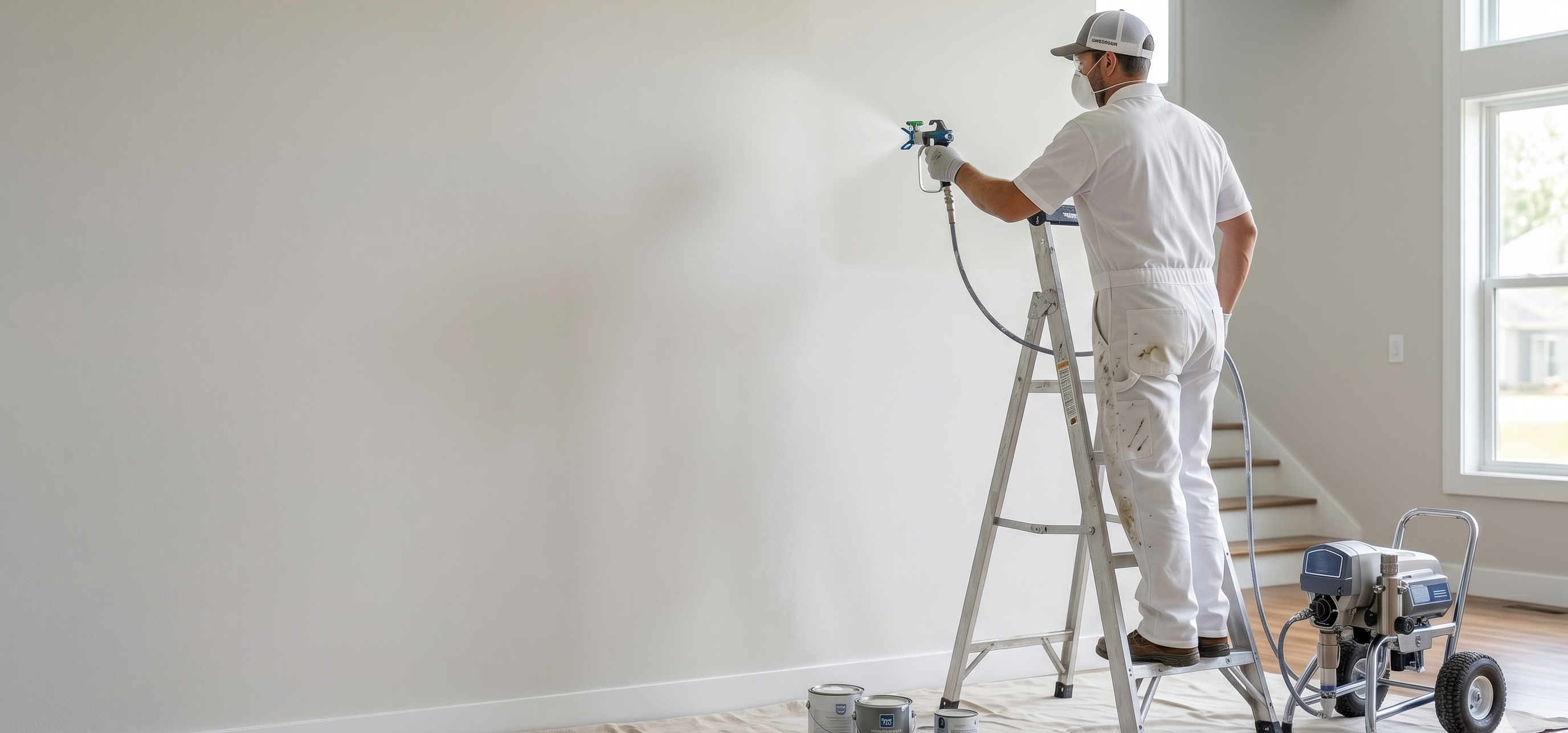
Most homeowners don’t repaint when they should. They repaint when the wall has reached a level of obvious shabbiness that’s been bothering them for two years.
This is understandable — interior repaints are disruptive, expensive, and easy to defer. But knowing what the paint is actually doing, year by year, makes the decision easier. You can plan it during a remodel, time it with a furniture move, and avoid the panic-repaint that always seems to come the week before guests arrive.
Here’s the timeline we’d give a friend.
The honest lifespan benchmarks
For a properly applied, premium interior paint job, this is the realistic expectation:
- Adult bedrooms, formal dining, low-traffic rooms — 8–12 years
- Living rooms, family rooms — 7–9 years
- Kitchens — 4–7 years
- Bathrooms — 5–7 years
- Hallways, mudrooms, entries — 4–6 years
- Kids’ bedrooms and playrooms — 4–6 years
- Trim and doors (in semi-gloss) — 10–15 years before they need a real repaint, longer with periodic touch-ups
- Cabinets — 6–10 years for a well-prepped, properly enameled cabinet job
These are not guesses. They’re what we see on customer call-backs and repaint projects across the Seattle area, across hundreds of homes.
Why those numbers spread so wide
The 8–12 year band on a bedroom isn’t fudging. It’s the actual variability we see, driven by:
- Original prep quality. A paint job over a properly washed, sanded, primed wall lasts 30–50% longer than one over a quick scuff-coat. The job you got is doing more or less work depending on what’s under it.
- Paint tier. Premium acrylic (Aura, Emerald, Cashmere top of line) buys real years over a basic contractor-grade product. Not double, but noticeably.
- Humidity stability. Rooms that stay between 35–55% relative humidity year-round outlast rooms that swing from 25% in winter to 70% in summer.
- Direct sunlight. South and west walls fade meaningfully faster than north walls, especially in saturated colors.
- Household traffic. This is the biggest variable. A retired couple’s hallway lasts twice as long as a family with three kids and a dog.
What the paint is actually doing over time
Paint doesn’t die in one moment. It fails in five stages, and you can sometimes intervene at stages 2 or 3 to buy years.
Year 0–2: Curing and burnishing
Acrylic paint fully cures over about 30 days but continues to harden for up to a year. During this period, gentle handling matters most. Touching, leaning, scrubbing — anything aggressive can cause local burnishing (a permanent shiny spot where the surface has been compressed).
If your family inherited the home a year ago and the walls look great, you can extend that condition years just by being careful with cleaning during this stretch.
Year 2–5: Surface dirt, scuffs, marks
Real life happens. Hands on light switches, shoulders on hallway corners, doors brushed against thresholds. A good interior paint will let most of this clean off with a damp cloth and mild soap.
This is where premium scrub-resistance pays off. Cashmere, Aura, Emerald all clean nicely at year 4 with a microfiber cloth. Lower-tier paints start to show the pattern of where you’ve cleaned versus where you haven’t.
Year 5–8: Sheen burnishing and fingerprints
Even premium paint starts to show wear at the touch points: light switches, the corner you brush coming downstairs, the spot above the couch. The sheen becomes uneven — slightly shinier where it’s been touched.
This is the right time to consider touch-ups with leftover paint. If you saved a quart from the original job, a small artist’s brush and a 15-minute pass through the touch points can extend the look by years.
Year 7–10: Visible color fade and uneven walls
By this point, sunlight has done real work on saturated colors. Behind that piece of art you’ve never moved, the original color is still there. On the wall where the morning sun hits, it isn’t. This is when whole-room repaints start to become inevitable.
Touch-ups stop blending here. The leftover paint that matched perfectly at year 3 doesn’t match the sun-faded wall at year 8.
Year 10+: Surface integrity issues
The paint film itself starts to show wear: hairline cracks at corners, fine alligatoring around trim, slight chalkiness on cleaning. At this stage, repaint is the right answer. Touch-ups are cosmetic putty over a structural issue.
The five signs you should pay attention to
When we walk a house for a repaint quote, here are the signs we look at — in the order they typically show up:
- Scuff marks that no longer clean off. Hand soap and a damp cloth used to take it off. Now it leaves a faint shadow. The film has lost its scrub-resistance.
- Sheen burnishing at touch points. Hold a flashlight low and parallel to the wall. Shiny spots near light switches and hallway corners are the early warning.
- Hairline cracks at corners and trim joints. Small, dark lines where the wall meets the ceiling or where casing meets wall. The film is no longer flexible enough to bridge seasonal movement.
- Color fade visible when you move a piece of furniture. Pull a couch away from a wall it’s been against for 8 years. If you see an outline, you have a repaint coming.
- The wall feels chalky. Run a finger across the wall. Pick up a fine residue? The pigment is no longer fully bound to the resin. This is end-of-life.
Two of those signs together usually means “next 18 months.” Three or more means “now.”
How to extend interior paint lifespan
The honest list:
- Save your leftover paint. Two quarts per color, in a cool dry place. Label them. Leftover paint at year 4 saves a whole-room repaint at year 8.
- Touch up promptly. A 5-minute touch-up at the moment of a scuff prevents the moment-of-truth at the dinner party.
- Keep humidity in the 35–55% band. Run dehumidifiers in basements and bathrooms; use a humidifier in winter if you have a forced-air system that dries the air below 30%.
- Vent bathrooms aggressively. A bath fan that actually moves air doubles the life of bathroom paint.
- Manage sunlight in saturated rooms. Sheer curtains, UV-filtering shades, or just rotating artwork every few years can dramatically slow fade.
- Don’t use abrasive cleaners. No magic erasers on a paint finish you care about. Damp microfiber, mild dish soap, gentle pressure.
When to bite the bullet
The wrong time to repaint is when it’s already obviously shabby. By that point you’ve lived with the diminishing returns for two years.
The right time is when:
- You’ve identified two or more of the five warning signs above
- You have a window of 1–3 weeks of access flexibility
- You’re not paying for a vacant rush
- You can book a quality crew on a non-rush schedule
For most homes, that lands every 7–10 years on the public-facing rooms and every 4–6 years on the kitchen and kids’ spaces. If you keep that cadence and pair it with periodic touch-ups, your house never quite gets to “I can’t have anyone over until we repaint.” It just stays good.
Which is the entire point of paying for a good paint job in the first place.
On this topic
Reader questions
Whole-house repaints typically happen every 7–10 years. High-traffic rooms (kitchens, hallways, kids' rooms) often need a refresh at 4–6 years. Trim and doors usually outlast walls by 2–4 years. The right cadence depends on quality of the original paint job, family, and lifestyle.
Kitchen walls with quality eggshell or satin paint last 4–7 years before a refresh becomes obvious. Heat, grease, steam, and frequent cleaning shorten the lifespan compared to bedrooms. Trim and cabinets last longer if they were properly enameled.
8–12 years is realistic for adult bedrooms with low-traffic. Kids' bedrooms typically need a refresh at 4–6 years. Master bedrooms with east-facing windows can fade earlier than expected on south-facing color walls.
Constant humidity cycling, hot showers, and frequent cleaning attack interior paint film at every angle. Even with semi-gloss or pearl in the right places, bathrooms typically need attention every 5–7 years. Ventilation quality is the single biggest variable.
Five reliable signs: visible scuff marks that no longer clean off, sheen burnishing where the wall has been touched, hairline cracks at corners and trim joints, color fade visible behind furniture or artwork moved for the first time, and the surface feels chalky to the touch.
Yes, but the gap is smaller indoors than outdoors. Premium interior paints last 1–3 years longer in high-traffic rooms because of better scrub resistance and color retention. In low-traffic rooms, the gap may only be 12–18 months.
Significantly. Keep humidity stable, clean gently with damp cloth and mild soap (not abrasives), touch up scuffs promptly with leftover paint, and avoid direct sunlight on dark colors with sheer curtains or shades.
Keep reading
Related field notes.
How to prepare your home for an interior paint job
A small amount of homeowner prep before the crew arrives shortens the job, protects the things you care about, and makes for a much better finished result.
How to choose paint colors for your home (without regret)
Most paint regret comes from the same five mistakes. Avoid them, sample seriously, and you will land on colors you still like two years from now.
How much does it cost to paint a house in Seattle? (2026 pricing)
Most online painting calculators are wrong for Seattle. Here is what a real 2026 quote looks like — line by line — and what actually drives the number up or down.