How to choose a painting contractor: questions to ask
A great painter and a terrible painter often quote within 15% of each other. The difference is in twelve questions you can ask in twenty minutes — and the answers tell you everything.
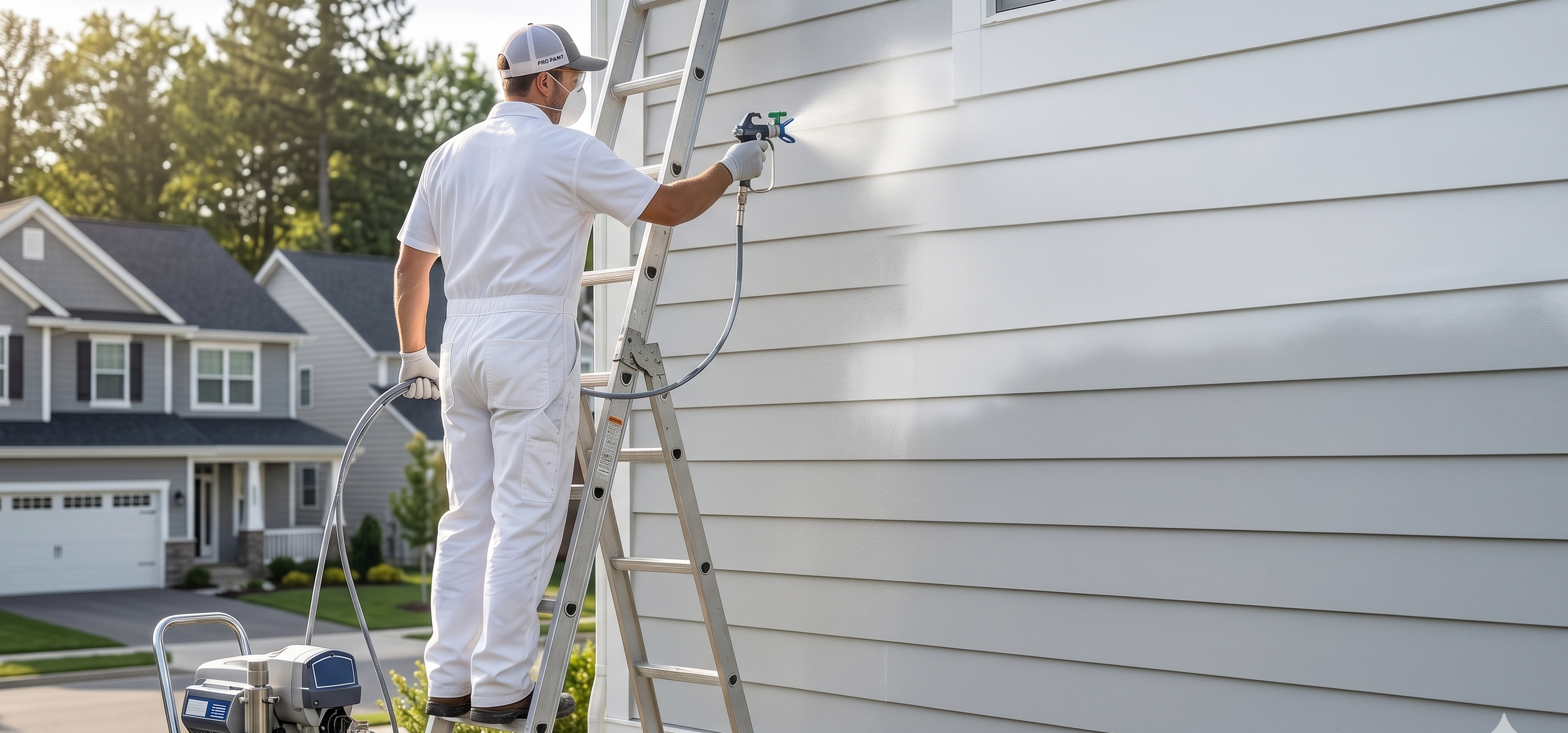
The honest version of “how to hire a painting contractor” is: there are about a dozen questions that take twenty minutes to ask, and they will filter out 70% of the people advertising for paint work in any given Seattle ZIP code. The remaining 30% are the contractors you actually want to compare.
This guide is the list. We’re writing it as the contractor we’d want our clients to be reading before they call us, because the homeowners who do their homework end up with better outcomes — with us or with whoever they pick.
Before you call anyone: the L&I check
In Washington, this is the single most useful filter. Every legitimate residential painting contractor must be registered with the Department of Labor & Industries.
Go to the L&I license lookup tool. Enter the business name. Check for:
- Active registration status (not “suspended” or “expired”)
- A registration number that matches the marketing materials
- Surety bond on file ($12,000 for general contractors, $6,000 for specialty)
- Active liability insurance
- Active workers’ compensation coverage (if they have employees)
- Infractions or violations (and how recent)
About a third of “painting contractors” advertising on Craigslist, Nextdoor, and lawn signs in the Seattle area fail this check immediately. They’re not necessarily bad painters. They’re operating without the bond, insurance, and worker protections you’d want covering work on your property.
If a contractor cannot pass the L&I check, the rest of this list doesn’t matter.
The twelve questions
For the contractors who pass the L&I check, here are the questions that determine which one to hire. You can ask all of these in a single in-person walkthrough.
1. “Who will actually be on my property?”
The salesperson at the kitchen table is often not the painter on the ladder. That’s fine — it’s how real businesses are structured. What you want to know is whether the on-site crew is:
- W-2 employees of the contractor (best case — quality control, training, accountability)
- Long-term subcontracted crews who work primarily with this contractor (acceptable)
- Rotating day-labor or one-off subcontractors (red flag)
The right answer sounds like: “Our lead Daniel and his two-person crew will be on your project from day one through punch-list. They’re employees of NorthLine.”
The wrong answer sounds like: “We’ll send a crew.”
2. “What product and brand are you using, and why?”
Vague answers are a problem. “Professional grade paint” is not a product. “Sherwin-Williams” is a brand, not a product. The right answer names the specific line, the sheen, and the reason.
A good answer: “Sherwin-Williams Emerald Exterior in satin for body, semi-gloss for trim. It’s the most durable exterior product in the Pacific Northwest climate and self-levels better than the alternatives.”
If they can’t answer at this level of specificity, they don’t think hard about paint. See our Sherwin-Williams vs Benjamin Moore comparison for what a confident answer sounds like.
3. “How many coats, and is that written in the contract?”
Two coats means two coats. “One coat with cut-in” is not two coats. If they’re vague about coats or use the word “as needed,” ask for written commitment. A real contractor will write it in.
4. “Walk me through your prep process.”
This is where good contractors and bad contractors fundamentally differ. The good ones will spend real time on this question. The bad ones will use a single phrase like “we do all standard prep” and move on.
A good answer for an exterior includes: low-pressure wash, dry time (48+ hours), full surface scrape of failing paint, sand to feather edges, caulk replacement at failing joints, spot prime on bare wood, full prime on color changes or major repairs.
A good answer for an interior includes: drop cloth and plastic for furniture and flooring, removal of outlet covers and switch plates, fill and sand holes, caulk gaps at trim and ceilings, prime patches and stains, two finish coats.
If their prep description fits in one sentence, the prep is probably going to be one sentence too.
5. “Can I see your insurance certificates?”
Not “are you insured?” — anyone can say yes. Ask for the certificates. A legitimate contractor either has them in the truck or will email them within an hour. Ask for:
- General liability ($1 million minimum)
- Workers’ compensation (if they have employees)
- A binder showing your property as additional insured for the project window (optional but premium contractors will offer)
6. “What is your warranty, and is it in writing?”
The warranty itself matters less than two things:
- Is it in writing in the contract?
- Is the contractor likely to be in business to honor it?
A 2-year written warranty from an established, registered, insured contractor is more enforceable than a 10-year warranty from someone you can’t find in 18 months.
7. “Can I see two references with projects that are at least 2 years old?”
Anyone can produce a glowing reference from a job they finished last week. The question is what the job looks like at year 2. Ask the references about:
- How the paint has held up
- Whether the crew on-site matched the salesperson
- Whether change-orders came up
- Whether any warranty issues have been handled
- Whether they’d hire the contractor again, and why or why not
The “why or why not” answer is often the most informative. Pay attention to hesitations.
8. “What does your payment schedule look like?”
In Washington, the standard residential paint contract payment structure is:
- 25–35% deposit to schedule (paid when the contract is signed)
- 25–40% at start of work
- Balance at completion, after walk-through and punch-list
Watch for:
- Deposits above 50% — a red flag for cash-flow problems
- Full payment before completion — never
- Request for cash only — almost always means undocumented labor and no insurance
9. “What if it rains? What if I find something I want changed?”
How a contractor talks about weather days and change orders tells you how disciplined the business is.
For weather: a good answer acknowledges that exterior schedules slip, has a buffer plan, and doesn’t push paint into bad conditions. (See our best-time-to-paint guide for what that actually looks like.)
For change orders: a good answer has a process — written change request, written cost adjustment, both sign before work proceeds. A bad answer is “we’ll just handle it” — which means surprise invoices at the end.
10. “How long has the business operated under this name?”
Painting is a low-barrier industry. Many “20 years of experience” claims belong to the owner personally, not the business. Both matter, but they’re different.
Use the L&I lookup to verify the registration date. A business registered three months ago, even if the owner has 20 years of experience, has not built systems for warranty and scheduling that survive a slow season. That’s a real risk for the customer.
11. “What does the contract specify in writing?”
A complete residential paint contract includes:
- The full legal name of the contractor
- L&I registration and contractor bond numbers
- Scope of work, room by room or surface by surface
- Paint product, sheen, and number of coats
- Prep work itemized
- Warranty terms
- Payment schedule
- Estimated start and completion dates
- Change-order process
- Signatures with date
Anything missing from this list is either negotiable or a red flag. A handshake quote on a torn-out estimate book is fine for a fence stain. It’s not fine for a whole-house exterior.
12. “What happens at the walk-through?”
A good contractor will tell you that the punch-list walk-through is a normal part of every project. They expect 3–10 small items to surface, they’ll address them on the spot, and final payment doesn’t change hands until you’re happy.
A contractor who acts like a walk-through is a hassle, or wants final payment before completion, is signaling how the project’s last 5% will actually go.
Red flags that should end the conversation
If you encounter any of these, walk:
- No L&I registration, or expired registration
- Refusal to provide insurance certificates
- “We can do it cheaper for cash”
- Pressure to sign immediately (“this price is good today only”)
- Door-to-door cold approach with a “we have leftover materials from a neighbor’s job” pitch (this is a well-known scam pattern)
- No physical business address
- Reviews that all sound the same or all dated within the same two-week window
- Asking for over 50% deposit
- Vague answers to direct questions about prep, paint, or warranty
What a great contractor’s quote looks like
For comparison, a good NorthLine quote will:
- Print under our legal business name and L&I number
- List every surface and room in the scope
- Name the specific paint product, sheen, and number of coats
- Itemize prep (wash, scrape, sand, caulk, prime)
- State the warranty in writing
- Include a payment schedule
- Show an itemized change-order policy
- Be signed and dated, with copies for everyone
If three of those are missing from a quote you’re holding, that’s the conversation you should be having before you sign.
A closing note
There’s no shortcut. The contractor you hire will have your house in their hands for one to three weeks and will affect how it looks for the next decade. The twenty minutes spent on the L&I check and these twelve questions is the most cost-effective hour you’ll spend on the project.
If you’d like a walk-through with someone who answers all of these without flinching, book a NorthLine estimate. We answer the questions in the order you ask them.
On this topic
Reader questions
Are you registered with Washington L&I and can I see your registration number? It is the easiest filter — registration confirms the contractor carries the required bond, has liability and workers' comp insurance, and is operating legally. About 30% of "painters" advertising in the Seattle area fail this check.
Use the Washington L&I license lookup tool. Enter the business name or registration number. The result shows registration status, bond amount, insurance status, and any unresolved infractions. It is free, fast, and the single best filter you can run.
Yes — three is the standard. But do not pick the middle one by reflex. Read the scope on each. Quotes within 30% of each other on the same scope are normal; quotes that are 50%+ apart almost always mean one is missing prep, materials, or coats.
Ask if the work has held up (target 2+ year-old projects), whether the crew on-site matched the salesperson, whether there were any change-orders during the work, how the warranty has been honored, and whether the reference would hire them again — and why or why not.
In Washington, deposits over 50% of the contract value are a red flag and often a sign of cash-flow problems. A normal deposit structure is 25–35% to schedule, 25–40% at start, balance at completion. Reputable contractors do not need full payment up front.
The honest estimate is specific. It names the paint product and number of coats, itemizes prep work, lists warranty terms in writing, and is signed under the contractor's actual legal name. Vague language ("standard prep," "professional paint") is the marker of a hedge.
A warranty is only worth the contractor still being in business and willing to honor it. A 5-year warranty from a one-person LLC that may not exist in 18 months is theoretical. A 2-year warranty from an established, registered, insured contractor with a track record is enforceable.
Keep reading
Related field notes.
How much does it cost to paint a house in Seattle? (2026 pricing)
Most online painting calculators are wrong for Seattle. Here is what a real 2026 quote looks like — line by line — and what actually drives the number up or down.
Best time of year to paint your home exterior in Washington
The painting industry pretends the season runs May through October. In Western Washington, the real window is shorter — and the cost of getting it wrong is paid in years, not weeks.
How to prepare your home for an interior paint job
A small amount of homeowner prep before the crew arrives shortens the job, protects the things you care about, and makes for a much better finished result.