Best time of year to paint your home exterior in Washington
The painting industry pretends the season runs May through October. In Western Washington, the real window is shorter — and the cost of getting it wrong is paid in years, not weeks.
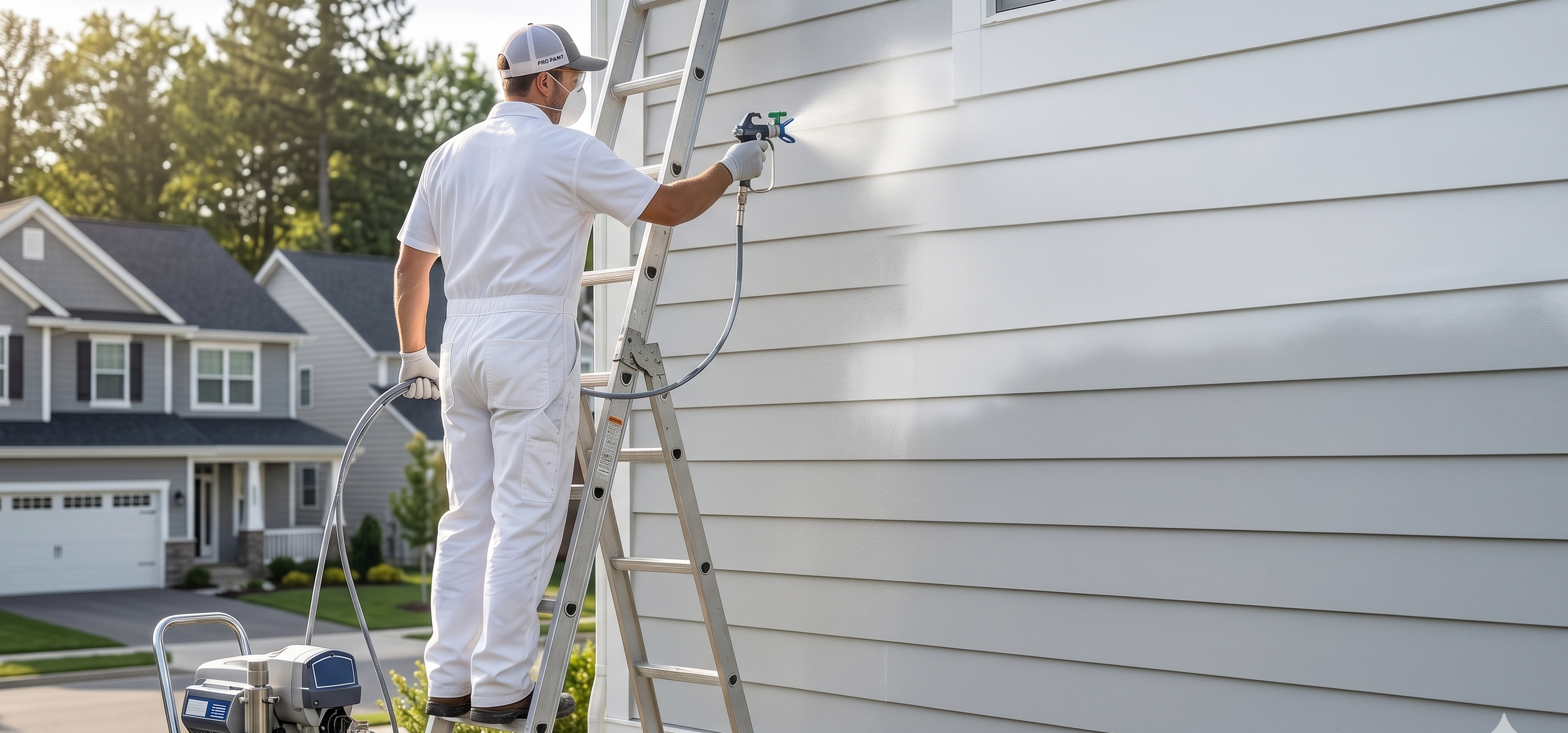
There’s a paint-industry chart that gets passed around every spring. It says exterior painting in Washington runs from May through October. That chart is wrong, in the same way it would be wrong to say the ski season runs from October through April. Some weeks are real; some are wishful thinking.
This guide is built from 12 years of writing exterior schedules in King and Snohomish counties. It will tell you the windows we actually book, the windows we steer clients away from, and what to do when life doesn’t give you a choice.
Why the calendar matters more than the forecast
Paint failure in the Pacific Northwest almost never happens because someone picked the wrong color. It happens because the paint went on a surface that wasn’t ready, or in conditions the resin couldn’t tolerate during cure.
Modern 100% acrylic exterior paints are remarkable products. They flex with siding, shed water, resist UV. But they need:
- A surface temperature above 50°F (35°F for cold-weather formulations) during application and the first 24 hours
- A dew-point gap of at least 5°F (so condensation doesn’t form on the curing film overnight)
- No direct rain for 24 hours after application
- Several days of low humidity to fully cure
The chart that says “May through October” is matching the air temperature averages, not the surface temperature, not the dew-point math, and not the cure window. In Western Washington, those four conditions stack up reliably for about 12 weeks a year. Outside that window, every project becomes a forecast-watching exercise.
The real Washington paint windows
Here’s how we map a typical year:
The prime window: mid-June to late September
This is the calendar we fight to book into. By mid-June, dew points have usually dropped low enough to start at 7:30 AM. Daytime highs are forgiving. Three-day dry stretches are routine. By the third week of September we’re starting to chase shorter days and longer dew-burn, but it still works.
If you have flexibility, this is your window. Plan to commit by April.
The shoulder seasons: mid-May to mid-June, late September to mid-October
These weeks are workable, but every project is forecast-managed. A typical shoulder-season schedule looks like:
- Start prep on a confirmed 4-day clear stretch
- Paint sun-side first to use afternoon temps
- Pull tarps and stage drop cloths every evening because morning dew will sit until 9–10 AM
- Add a buffer day on the back end for “we lost Tuesday to a 60% rain forecast”
A good shoulder-season job comes out indistinguishable from a July job. A rushed one shows up as adhesion failure in two years.
The hard no: November through March
We won’t quote exterior painting in these months in Western Washington. Cold-weather paint formulations technically extend the application window, but:
- Surface temperatures stay below 50°F for days at a time
- The cure window is too long for typical PNW weather to honor it
- The risk of trapping moisture under fresh paint is real and very expensive to fix
Anyone willing to paint your exterior in January in Seattle is making a business decision, not a craftsmanship decision. They will be gone by the time the failure shows up.
The complicated middle: April and early May, late October
These are the months people most want to book (“we just want it done before summer guests” / “let’s get it on before winter”) and the months we are most cautious about. They can work — but only with patience.
Spring projects are sometimes feasible by mid-April, but you’re agreeing to weather delays. October projects need to wrap by the 20th to leave cure time before the wet returns in earnest.
How weather actually drives the workday
When a crew is on-site in a workable but imperfect window, here’s what governs whether they paint:
- Dew burn-off — surfaces have to be dry before primer or paint. In June, that’s around 9 AM. In May, more like 10:30. In October, sometimes never.
- Surface temp vs air temp — north-facing walls in May can sit at 48°F all morning while the air is 55°F. We use an IR thermometer, not the weather app.
- Wind — light wind helps with cure but anything over 12–15 mph drives overspray, even with brush and roll.
- Humidity vs dew point — humidity matters less than the gap between surface temp and dew point. 80% humidity at 70°F is fine. 80% humidity at 52°F overnight is a problem for a wall painted at 4 PM.
- Sun angle — direct sun on a west-facing wall at 5 PM in July can run that surface to 100°F+. We chase the shade, not the schedule.
This is why a serious exterior crew looks like it’s “wasting time” rotating sides of the house. They’re not wasting time. They’re working within paint chemistry.
What to do if you have to paint outside the window
Real life happens. You’re selling the house in November. The HOA letter came in March. Insurance demands it. A few honest options:
Option 1 — Partial scope. If only the south wall is failing, we can sometimes do the south wall in a viable shoulder week and schedule the rest for next year. Not pretty, but it buys time.
Option 2 — Cold-weather acrylic, with caveats. A few products (Sherwin-Williams Resilience, Benjamin Moore Aura with the cold-weather rider) extend the application range. We will quote it if the forecast cooperates and you accept a shorter warranty. We won’t quote it under 40°F.
Option 3 — Stain, not paint, for outbuildings and fences. Stains are more forgiving than paint about cure conditions. If the actual goal is to make a fence not look terrible before listing, a stain refresh is often a smarter and faster move.
Option 4 — Don’t. Sometimes we tell people to wait until April. We lose a job and keep a reputation.
How far ahead to book
The honest schedule for a typical Western Washington summer:
- By February — you’ve talked to 2–3 contractors and gotten quotes
- By April — you’ve signed and you’re on a calendar
- By early June — your crew confirms a start window
- June–September — work happens
- October — punch-list, estimate is honored for one final touch-up before winter
If you’re reading this in April and you haven’t started: still possible, but the quality crews are getting full. If you’re reading this in July with no contractor yet: aim for a September start, not a “next week” start. The crews available “next week” in July are not the ones you want.
A simple rule for the rest of it
If you’re not sure whether the window works for your project, the rule is: the forecast has to be wrong twice in a row before you have a problem. A great window survives one bad forecast day. A marginal window doesn’t.
That’s most of what 12 years of Pacific Northwest exterior schedules comes down to. Pick the prime window when you can, plan the shoulder seasons carefully when you can’t, and don’t let a fall deadline talk you into a winter paint job.
When you’re ready to pick a date, send us the house and we’ll find the right week, not just the next available one.
On this topic
Reader questions
Mid-June through late September is the most reliable window in Seattle. Temperatures stay in spec, dew points are low enough for early-morning starts, and the chance of a 3-day dry stretch is highest. May and October work in good years but carry weather risk.
Most modern acrylic exterior paints cure between 35°F and 90°F surface temperature, but they perform best when applied between 50°F and 85°F with surface temperatures staying above 50°F for 24 hours. Cold-weather formulations stretch the low end but they are not magic.
You cannot paint a wet surface and you cannot paint within 24 hours of rain on an unsealed surface. Modern paints dry to touch in 1–2 hours but full film cure takes longer. Rain inside that window washes uncured paint off — sometimes invisibly, as a thin chalky residue.
Above 90°F surface temperature, paint flashes off too fast and lap marks become permanent. Sun-side walls get there fast in July and August. Smart crews chase the shade around the house, painting north and east in the morning and west in the late afternoon.
Dry to touch in 1–2 hours, dry to recoat in 4–6 hours, full chemical cure in 14–30 days depending on humidity and temperature. The film is vulnerable to rain damage for at least 24 hours in our climate, sometimes longer.
Spring (mid-May to mid-June) and fall (mid-September to mid-October) are workable but carry rain risk. We prefer late spring to early fall over late fall because long October dries are unusual, and a half-finished paint job carrying into November is a serious problem.
For the prime June–August window, 8–14 weeks in advance is typical. Quality crews fill the calendar by April. Last-minute August bookings usually mean either a sub-contracted crew or rescheduled into October — neither is ideal.
Keep reading
Related field notes.
How much does it cost to paint a house in Seattle? (2026 pricing)
Most online painting calculators are wrong for Seattle. Here is what a real 2026 quote looks like — line by line — and what actually drives the number up or down.
Interior vs exterior paint — what is actually different?
It is not marketing. Exterior and interior paints are formulated to solve completely different problems. Using one where the other belongs is a slow-motion mistake.
How to choose a painting contractor: questions to ask
A great painter and a terrible painter often quote within 15% of each other. The difference is in twelve questions you can ask in twenty minutes — and the answers tell you everything.